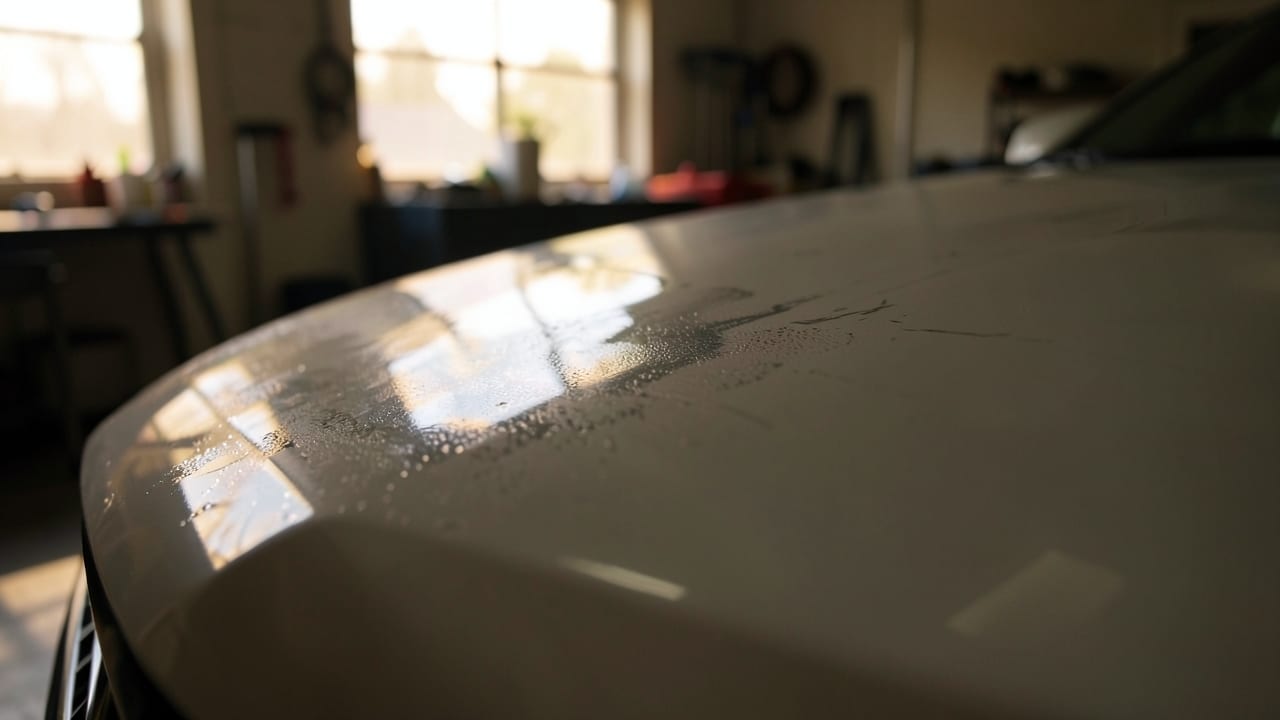
Acid Rain Etch Removal
Professional removal of acid rain etching from vehicle surfaces using ceramic coatings and paint correction.
Acid rain etch removal restores your vehicle’s paint in Albuquerque, NM, where harsh weather and environmental contaminants like brake dust, tar, and industrial fallout can damage clear coats over time.
This targeted process cleans, polishes, and protects your paint with ceramic coatings to prevent future corrosion and keep your car looking flawless for years. Ideal for cars exposed to Albuquerque’s unique mix of sun, dust, and airborne particles, this service ensures your paint stays smooth and protected.
We also handle RV Paint Protection and Metal Surface Anti-Corrosion for Albuquerque vehicles.
Why Albuquerque cars need this service
Albuquerque’s dry heat, industrial fallout, and frequent exposure to contaminants like brake dust and tree sap make acid rain etch removal a critical service for vehicle owners. Unlike general washing, this process targets embedded particles that cause dullness, swirl marks, or even paint etching over time.
If your car’s paint feels gritty or shows stubborn spots that won’t wash off, it’s likely time for decontamination.
Contaminants like iron particles from brake dust or tar from road surfaces bond to your paint’s clear coat, creating a rough surface that traps dirt and accelerates wear. Left untreated, these can lead to permanent etching or a hazy, dull appearance.
Albuquerque’s mix of urban and rural driving—including highway routes with heavy brake dust—makes this issue especially common for local drivers.
Signs Your Car Needs Acid Rain Etch Removal
- Paint feels rough or gritty when touched, even after washing.
- Dark, embedded specks remain after soap-and-water washing (especially on light-colored paint).
- Visible haze or dullness that doesn’t improve with regular cleaning.
- Orange or rust-colored spots concentrated near wheels or after highway driving.
- Contaminants reappear in the same spots after washing or treatment.
How contaminants affect your paint
Not all contaminants respond to the same treatment, which is why a one-size-fits-all approach fails. For example, iron particles from brake dust require a dedicated iron remover to dissolve, while tar or sap needs a specialized adhesive remover.
Using the wrong product can smear contaminants across a wider area, worsening the damage. Albuquerque’s mix of urban and rural driving exposes cars to a variety of these contaminants, making precise identification and treatment essential.
Skipping the proper steps—like clay bar treatment or chemical dwelling time—can leave contaminants trapped under the surface, reducing the effectiveness of any coating applied afterward. A thorough decontamination process ensures your paint is smooth and ready for protection, preventing future issues like premature coating failure or paint degradation.
| Contaminant Type | Common Sources in Albuquerque | Risk if Untreated |
|---|---|---|
| Iron particles (brake dust) | Highway driving, stop-and-go traffic | Permanent etching, rust spots |
| Tar/sap | Road surfaces, trees (e.g., cottonwoods) | Adhesive bonding, clear coat damage |
| Industrial fallout | Urban areas, windblown dust | Hazy, dull finish |
| Bird droppings | Parking near trees or green spaces | Acidic etching, paint discoloration |
What to expect during the process
After contaminant identification, the process involves targeted chemical treatments, mechanical lifting with clay bars, and a protective follow-up to restore your paint’s defense. Unlike a standard wash, this service addresses embedded issues at a microscopic level, ensuring your paint is not just clean but fully protected.
The result is a smoother, brighter finish that lasts longer under Albuquerque’s harsh conditions.
A key part of the service is the protective follow-up, which restores the wax or sealant layer stripped during decontamination. Without this step, your paint remains vulnerable to future contaminants.
This is especially important in Albuquerque, where repeated exposure to dust and debris can quickly undo the work if not properly sealed.
How acid rain etch removal works
- 1Contaminant Identification
The process begins with a close inspection to identify the specific contaminants on your paint, such as iron particles, tar, or brake dust. Each type requires a different chemical treatment, so accurate identification is critical for effective removal.
- 2Targeted Chemical Treatment
A specialized product formulated for the identified contaminant is applied and allowed to dwell on the affected area. For example, an iron remover is used for brake dust, while a tar remover targets adhesive residues. This step ensures the contaminant is chemically broken down before mechanical removal.
- 3Mechanical Lifting with Clay Bar
After the chemical treatment, a clay bar or mitt is gently worked over the treated area to lift any remaining contaminants. A lubricant is used throughout to prevent scratching the paint during this step, ensuring a smooth finish.
- 4Rinse and Inspection
The area is thoroughly rinsed to remove all product residue, followed by an inspection under direct light to confirm the contaminant is fully removed. This step is crucial, as some contaminants may appear gone indoors but reappear outdoors.
- 5Protective Follow-Up
A spray sealant or coating topper is applied to restore the protective layer stripped during decontamination. This step ensures your paint remains shielded from future contaminants, maintaining its condition long-term.
Frequently asked questions
How do I know if my car needs acid rain etch removal instead of a regular wash?
If your paint feels gritty or shows stubborn spots that don’t wash off with soap and water—especially on light-colored paint—it’s likely embedded contaminants. Regular washing won’t remove these, but acid rain etch removal targets them directly for a smooth, restored finish.
Can I use an all-purpose cleaner on contaminants like brake dust or tar?
No, all-purpose cleaners often smear contaminants like iron particles or tar instead of removing them. Each contaminant requires a specific chemistry, such as an iron remover for brake dust or an adhesive remover for tar, to avoid worsening the damage.
Will the ceramic coating prevent future contaminants from sticking to my paint?
A ceramic coating adds a protective layer that makes it harder for contaminants to bond as deeply, but it won’t stop them entirely. Regular washing and prompt treatment of new contaminants—especially within a day or two of exposure—are key to maintaining your paint’s condition in Albuquerque’s environment.
How often should I have this service done if I live in Albuquerque?
Frequency depends on exposure, but Albuquerque’s mix of urban and rural driving often means contaminants build up faster. A good rule is to address new contaminants within 48 hours of exposure and consider a full decontamination service every 6–12 months, depending on how quickly contaminants appear.
Where Albuquerque sits, and what the Census lists nearby
Albuquerque sits in New Mexico, and the closest places listed in the U.S. Census Gazetteer are Los Ranchos de Albuquerque (4 miles north), North Valley (4.9 miles north), Kirtland AFB (6.2 miles southeast), South Valley (6.9 miles south).
Within 25 miles of Albuquerque the same source lists 40 distinct incorporated places and census-designated places.
Those figures matter for acid rain etch removal because they are straight-line distances between Census coordinate points: road mileage between Albuquerque and Los Ranchos de Albuquerque runs longer than the 4 miles shown, which is why quotes for the same job differ between towns that look close together on a map.
Source: U.S. Census Bureau Gazetteer.
See Los Ranchos de Albuquerque, NM for more, or our full range of ceramic coating services for our complete lineup.
Ready to get started?
Talk to a local ceramic coating pro in Albuquerque — get a written quote.
Other Ceramic Coating Services in Albuquerque
RV Paint Protection in Albuquerque, NM
Ceramic coatings and protective sealants applied to RV exteriors to shield paint from UV, dirt, and scratches.
Learn More
Metal Surface Anti-Corrosion in Albuquerque, NM
Ceramic coatings and specialized paints applied to metal surfaces to prevent rust and corrosion.
Learn More
Fabric Soft Top Coating in Albuquerque, NM
Application of ceramic coating to protect and enhance fabric soft tops on vehicles.
Learn More
Tree Sap Removal in Albuquerque, NM
Professional removal of tree sap from vehicle surfaces using safe, paint-friendly methods.
Learn More
Iron Particle Decontamination in Albuquerque, NM
Removal of embedded iron particles from automotive paint using chemical solutions.
Learn More
Road Tar Removal in Albuquerque, NM
Professional removal of road tar from vehicle paint using safe, ceramic-friendly methods.
Learn MoreCommon Questions About Ceramic Coating in Albuquerque
Everything you need to know about ceramic coating services in Albuquerque
How much does Acid Rain Etch Removal typically cost in Albuquerque, NM?
Does intense UV and dust in Albuquerque, NM change coating maintenance?
Can ceramic coating be applied at home instead of by a detailing shop?
How long does a ceramic coating actually last in real-world use?
What is the difference between graphene and SiO2 ceramic coatings?
Does a ceramic coating need to be topped up over time?
Need Ceramic Coating in Albuquerque?
Get a written quote from our Albuquerque crew.
⏰ We answer your call • Serving all of Albuquerque and surrounding areas